



South Halmahera Supports Nutmeg and Clove Conservation Through the CDCSUI Project

South Halmahera Supports Nutmeg and Clove Conservation Through the CDCSUI Project
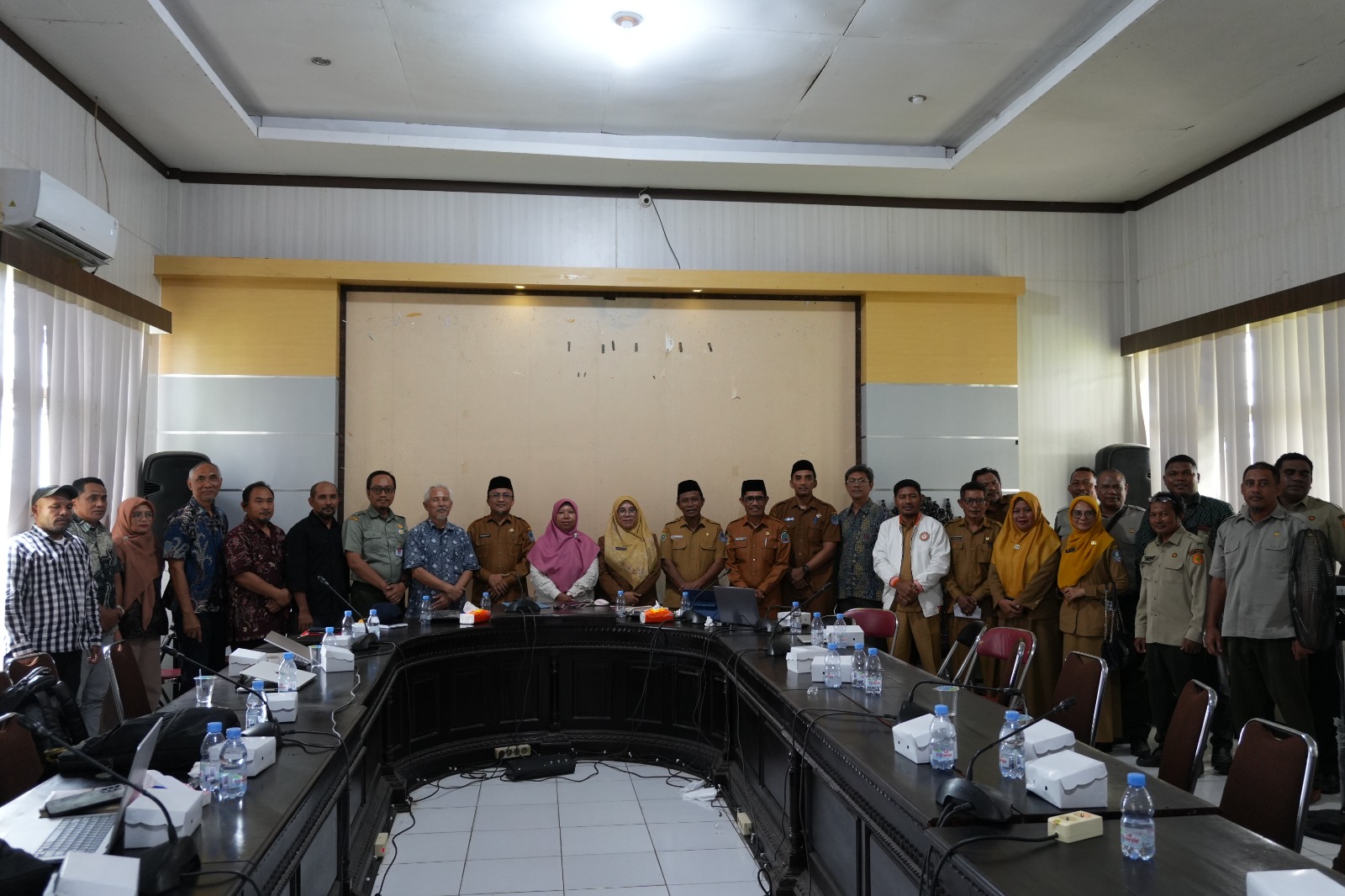
The Government of South Halmahera Regency has expressed its commitment to collaborating on the CDCSUI (Conservation and Diversification of Clove and Nutmeg Seeds for Utilization and Income) Project as an effort to strengthen the conservation of spice crop genetic resources, particularly nutmeg and clove. This commitment emerged during the project site selection consultation held on May 25, 2026, which was attended by heads of agencies and representatives of relevant regional apparatus organizations.
The meeting was chaired by the Assistant III of the Regional Secretariat, Muhammad Nur. In his remarks, he emphasized that the nutmeg and clove conservation program is highly precise and aligns with the South Halmahera Regency's Medium-Term Regional Development Plan (RPJMD) for 2025–2029. With a geographic landscape encompassing 462 islands, the regional government is currently advancing the strategic vision of "Agro-Maritime South Halmahera as a Spice Hub."
Spices Under Threat from Mining Expansion However, this agro-maritime vision is currently facing critical challenges. The agricultural sector's contribution to the regional economy has drastically declined from 38.55 percent in 2012 to 13.99 percent in 2022. This decline correlates directly with the rapid expansion of the nickel mining sector in the region.
Land conversion due to mining activities has resulted in the continuous reduction of nutmeg and clove plantation areas. This condition serves as an urgent justification for intervention through the CDCSUI Project. The genetic preservation of spices, both in-situ and ex-situ, is crucial to saving local varieties before they are depleted or go extinct. At the same time, the project is expected to encourage the downstream processing of spice products to provide strong economic incentives for farmers to retain their plantation lands.
Genetic Wealth and Variety Cross-Adoption The Head of the South Halmahera Agriculture Office explained that nutmeg and clove are absolute priority commodities within the RPJMD, with Makian Island being one of the largest production centers. In the field, farmers not only plant local seeds but also actively adopt certified superior varieties from surrounding areas, such as Pala Tidore 1, Pala Makian, Pala Ternate 1, Pala Tobelo 1, and Cengkeh AFO.
Specifically regarding purely local genetic wealth, South Halmahera takes pride in the release of the superior Sibela Clove variety originating from Bacan Island. This endemic clove tree possesses a distinctive morphology, towering over 12 meters with a cylindrical canopy, and is currently widely distributed across Obi Island.
Representatives of the Bacan Sultanate in attendance highlighted the vast potential of South Halmahera's germplasm that has yet to be fully explored. Historically, Bacan Island and Makian Island have been centers of spice trade and distribution since the colonial era. Today, the region still harbors wild relatives of nutmeg with unique characteristics and high conservation value.
One such relative is the "Velvet Nutmeg" (Pala Beludru), which has a hairy fruit skin and is commonly found on the slopes of Wayaua. Its fruit is exceptionally large, weighing up to approximately 185 grams, with the seed reaching up to 85 grams. Another variety is the "Mandaya Nutmeg" (also known as Dutch Nutmeg), which features pinkish fruit flesh and high-quality mace of significant economic value.
Customary Law Support for Conservation Efforts to preserve genetic diversity in South Halmahera are also bolstered by strong social capital in the form of local wisdom. The forum noted that the customary law of sasi (a traditional prohibition on harvesting agricultural products prematurely) is still strictly observed by the local community. The practice of sasi, which has proven successful in safeguarding community plantation commodities, is considered to have high potential to be specifically replicated as an instrument for protecting Selected Mother Trees (SMTs) of nutmeg and clove under the guidance of the CDCSUI Project.
Follow-up Actions Toward Official Designation Closing the forum, Muhammad Nur expressed his appreciation to all involved parties, including BRMP BIOGEN, BRMP North Maluku, academics, and representatives of the Bacan Sultanate. The outcomes of this strategic consultation will be further refined internally by the regional government. As a follow-up, the Regent of South Halmahera will promptly formulate and submit an official proposal regarding the project sites and detailed priority activities to the Head of BRMP BIOGEN, acting as the National Project Coordinator (NPC) of the CDCSUI Project.