



Consultation Between the CDCSUI Project Team and the Tidore Islands City Government Regarding the Selection of Activity Locations
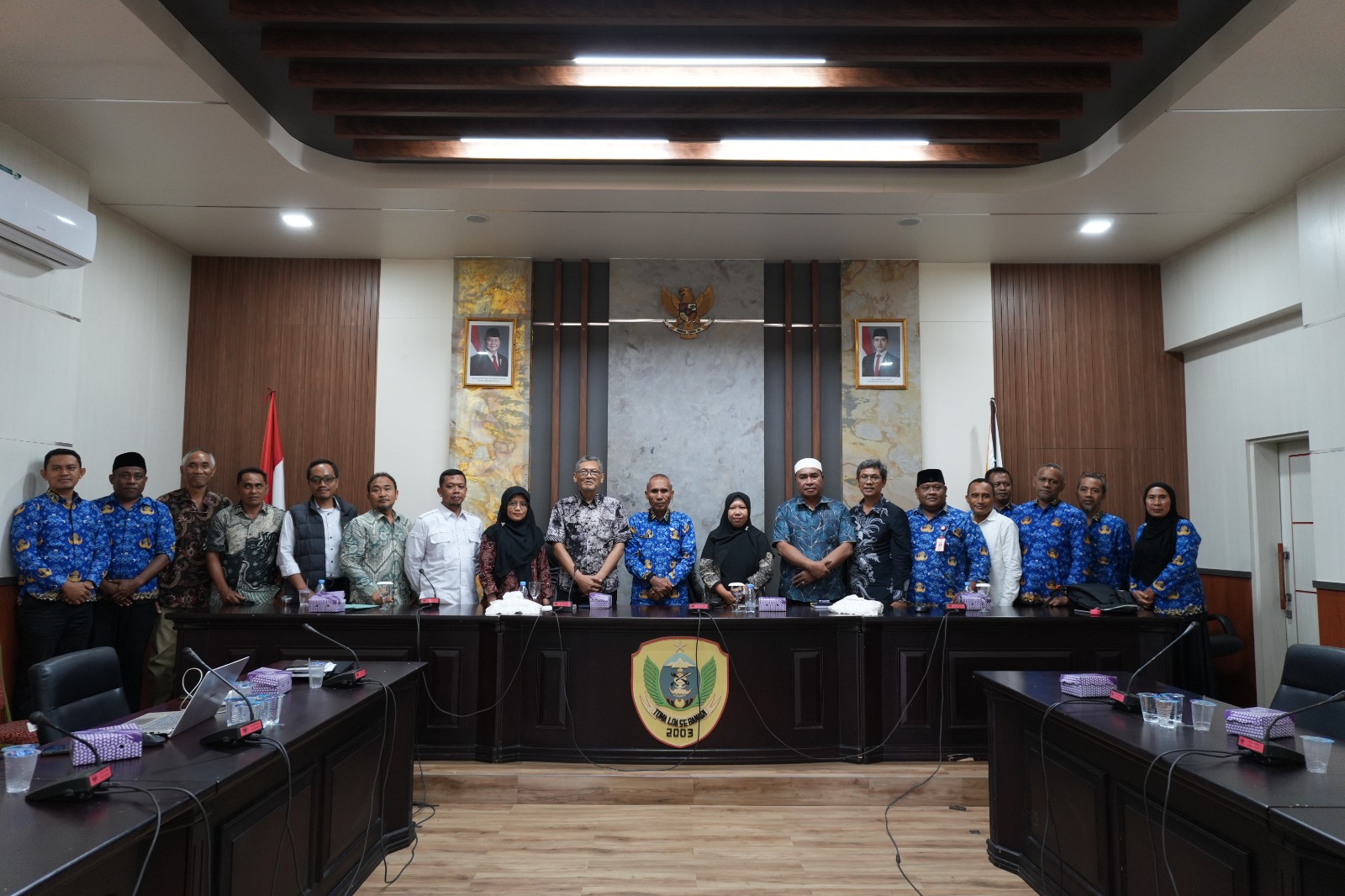

Consultation Between the CDCSUI Project Team and the Tidore Islands City Government Regarding the Selection of Activity Locations
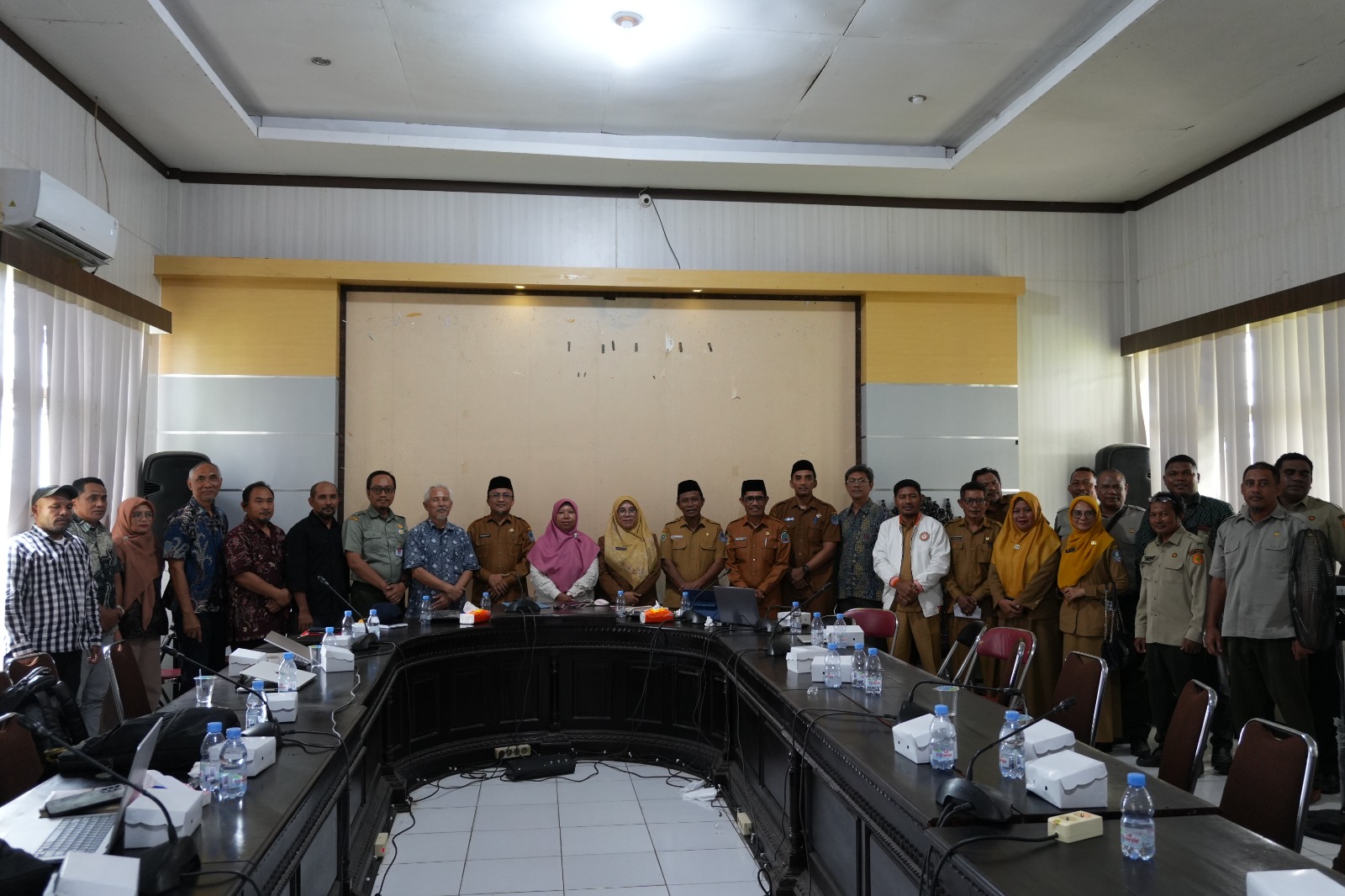
A consultation meeting with the Government of Tidore Islands City was held on 20 May 2026 to discuss the selection of implementation sites for the Conservation and Diversification of Clove and Nutmeg Seeds for Utilization and Income (CDCSUI) Project. The meeting was chaired by the Assistant for Economic Development and Administration (Assistant II) of Tidore Islands City, Taher Husain. In his opening remarks, Mr. Husain emphasized that the project is highly consistent with Tidore Islands City's designation as a conservation city. He further highlighted that nutmeg and clove, the primary commodities targeted by the CDCSUI Project, represent not only important economic resources but also form an integral part of the cultural identity of the people of Tidore Islands.
Geographic Characteristics and Potential of Crop Wild Relatives Geographically, Tidore Islands City covers approximately 2,875.09 km², comprising 1,703.16 km² of land and 1,171.93 km² of marine waters. The administrative area includes part of Halmahera Island and 16 smaller islands, making maritime transportation the backbone of the region's logistics and economic activities.
Part of Tidore Islands City falls within Aketajawe Lolobata National Park, while portions of its coastal waters are designated as a Regional Marine Conservation Area. Notably, nutmeg and clove ecosystems are found not only in cultivated farmlands but also occur naturally within the national park. At least eight species of wild relatives of nutmeg and five species of wild relatives of clove have been identified within the park. These Crop Wild Relatives (CWRs) represent valuable genetic resources with significant potential for exploration and conservation under the CDCSUI Project.
The same conservation landscape is also home to the Indigenous Togutil community, which continues to maintain a traditional way of life. Several Togutil communities now reside outside the park's core conservation zone and have established interactions with surrounding communities. These communities present strong potential to participate in the CDCSUI Project, particularly in the in-situ conservation of wild relatives of nutmeg and clove integrated into their traditional agroforestry systems.
Historical Conservation Significance and the Establishment of Mother Tree Collections Representatives of the Sultanate of Tidore emphasized that spice conservation should be planned at the scale of the small islands rather than focusing solely on agricultural areas on the main islands. Historical records indicate that during the VOC's eradication policy, the Sultanate of Tidore strategically safeguarded nutmeg and clove planting materials within territories under its authority, including Pisang Island and Gebe Island. This historical legacy reinforces the Sultanate's pioneering role in spice conservation and underscores the importance of preserving the remaining genetic diversity of traditional spice varieties that have survived since the colonial era across the Tidore archipelago.
From a technical perspective, the Head of the Agriculture Office of Tidore Islands City reported that the municipality currently does not possess dedicated mother tree orchards or germplasm collection gardens for nutmeg and clove. Consequently, the establishment of mother tree orchards, together with the conservation of Selected Mother Trees (SMTs), was proposed as one of the project's priority interventions. As a demonstration of its commitment, the City Government has allocated three pilot sites, each covering approximately 1,000–2,000 m², specifically designated for the conservation of local nutmeg and clove varieties.
Value Addition, Tourism Development, and Social Inclusion Tidore Islands City has adopted the strategic vision of becoming the "Zero Point of the Spice Route." Achieving this vision requires strengthening value-added processing of nutmeg and clove products to support the tourism sector.
The Head of the Tourism Office highlighted the importance of preserving traditional spice-based culinary heritage, including Ngasaro and Sarabati. Documentation of this traditional knowledge and cultural heritage aligns with Component 4 of the CDCSUI Project and will provide the foundation for establishing a Nutmeg and Clove Information Center in Tidore.
At the downstream production level, local communities currently process nutmeg flesh into syrup. However, utilization of the fruit flesh remains limited due to inadequate processing technologies capable of producing higher-value products, such as market-standard candied nutmeg. Furthermore, improved post-harvest technologies, particularly appropriate drying systems for nutmeg kernels and mace, are required to enhance product quality. Capacity-building programs for farmer groups and micro, small, and medium enterprises (MSMEs) therefore represent a strategic area for collaboration under the project.
From a demographic and intergenerational perspective, the Office for Population Control, Family Planning, Women's Empowerment, and Child Protection (P2KBP3A) emphasized that project implementation should explicitly involve women's groups, the Family Welfare Movement (PKK), and Women Farmer Groups (KWT). This inclusive approach responds to growing concerns over declining youth interest in agriculture. Through the CDCSUI Project, stakeholders expect to create new economic value chains capable of attracting younger generations back to agriculture while simultaneously strengthening the economic empowerment of rural women.
Conclusions and Follow-up Actions In closing, the Assistant for Economic Development and Administration reaffirmed the City Government's commitment to finalizing the proposed priority sites and activities through internal coordination. The finalized proposal will subsequently be submitted through an official letter from the Mayor of Tidore Islands City to the Head of BRMP BIOGEN, who serves as the National Project Coordinator (NPC) of the CDCSUI Project. Participants also agreed to establish an intensive coordination mechanism to ensure that field implementation is carried out efficiently, effectively, and in a timely manner.